
AI/Machine Learning Consulting
Accelerate Innovation with Rigorous, Interpretable, and Clinically Valid Machine Learning Solutions
At BioEpiNet, we help healthcare, life sciences, and digital health organizations build powerful, reliable, and explainable Artificial Intelligence (AI) and Machine Learning (ML) solutions. Whether you’re developing a predictive model, optimizing a diagnostic algorithm, or translating multi-omics data into insights — our PhD-led team combines technical expertise with deep healthcare domain knowledge to deliver results that stand up to clinical, regulatory, and operational scrutiny.
Core AI & Machine Learning Services
1. Machine Learning & Predictive Modeling
We design and validate predictive models using structured and unstructured data — including EHR, claims, sensor, and registry sources. Expertise includes survival models, XGBoost, random forests, time-series forecasting, and deep learning (CNNs, RNNs, transformers).
2. Biomarker Discovery & Omics-Based Prediction
We apply machine learning to genomics, proteomics, and metabolomics data for biomarker discovery, stratified medicine, and treatment response prediction.
3. Explainable AI for Clinical Use
We ensure interpretability and clinical trust with explainable AI techniques — including SHAP, LIME, and causal ML — enabling models to be used in decision support and meet regulatory expectations.
4. AI for Health Systems
We build and deploy models for patient triage, hospital readmission risk, length-of-stay prediction, and care pathway optimization — all validated with real-world clinical data.
5. Model Monitoring & MLOps
We support post-deployment model performance tracking, drift detection, and retraining pipelines using MLOps tools for scalable, production-ready solutions.
Sample Use Cases
- A biotech startup partnered with BioEpiNet to build a treatment response model using clinical trial and molecular data.
- A digital health company used our team to optimize their AI-driven risk score with subgroup validation and model calibration.
- A hospital network collaborated with us to create a SHAP-based readmission prediction tool, published in a peer-reviewed journal.
Who We Support
- Biotech & Pharma
For predictive biomarkers, AI-enhanced diagnostics, and omics-driven model development. - Digital Health Startups
To build, validate, and scale AI-based platforms and decision tools. - Health Systems & Payers
Deploying ML to improve outcomes, reduce costs, and drive value-based care. - Academic & Clinical Researchers
Seeking AI/ML support for grants, publications, or translational research pipelines.
Why Choose BioEpiNet?
- PhD-led team with deep AI, ML, and clinical domain expertise
- End-to-end lifecycle support — from model development to validation and deployment
- Fluency in Python, R, TensorFlow, PyTorch, and major MLOps platforms
- Regulatory awareness, explainability, and scientific credibility baked into every solution
Let’s Talk
Have a model to build, validate, or publish?
Start with a free consultation and technical review.
How to Build Trustworthy AI in Healthcare: Lessons from the Field
Artificial Intelligence (AI) and Machine Learning (ML) are transforming healthcare — from optimizing patient triage to accelerating drug discovery. But in an industry where lives are at stake, flashy algorithms aren’t enough. Success depends on rigor, transparency, and clinical trust.
At BioEpiNet, we’ve helped healthcare and life sciences teams move beyond experimentation into deployment-ready AI tools. Here’s what we’ve learned:
1. Clinical AI Must Be Interpretable
We’ve seen this time and again: a highly accurate model fails to get clinical buy-in because its decision process is opaque. That’s why we build explainable AI using SHAP values, LIME, and causal ML — so clinicians and regulators understand why a prediction is made.
Case Example: A hospital network rejected a “black box” risk score until we rebuilt it using interpretable features and visual explanations. It was later published and adopted across three hospitals.
2. Validation Is Non-Negotiable
It’s easy to train a high-performing model on your own dataset. It’s much harder to ensure it performs reliably across populations, hospitals, or subgroups. At BioEpiNet, every model goes through:
- Cross-validation
- External validation
- Subgroup analysis
- Drift detection
This ensures your model performs consistently — not just under ideal conditions, but in real-world environments.
3. Omics + AI = Precision, Not Complexity
Omics datasets (genomics, proteomics, metabolomics) are messy and massive. We help clients go from noise to signal by combining dimensionality reduction, feature selection, and Bayesian approaches. The result? Clear, testable predictions — ready for biomarker discovery, drug targeting, or patient stratification.
4. Machine Learning for Operations: Underrated but Critical
Everyone talks about AI for diagnosis. But some of the biggest wins we’ve seen come from using ML for hospital workflow optimization:
- Predicting readmission risk
- Forecasting length of stay
- Supporting resource allocation
These tools deliver ROI within months — often with simpler models that are easier to implement.
The Bottom Line
AI and ML can revolutionize healthcare — but only when built with care, validation, and clinical alignment. At BioEpiNet, we don’t just code models. We craft deployable, interpretable, and trusted AI systems that make a difference.
Have an idea or challenge?
Let’s discuss how we can support your vision — from concept to validation to clinical impact.
Book Your Free Consultation!
You can message us and we will respond promptly.
Why Clients Choose BioEpiNet
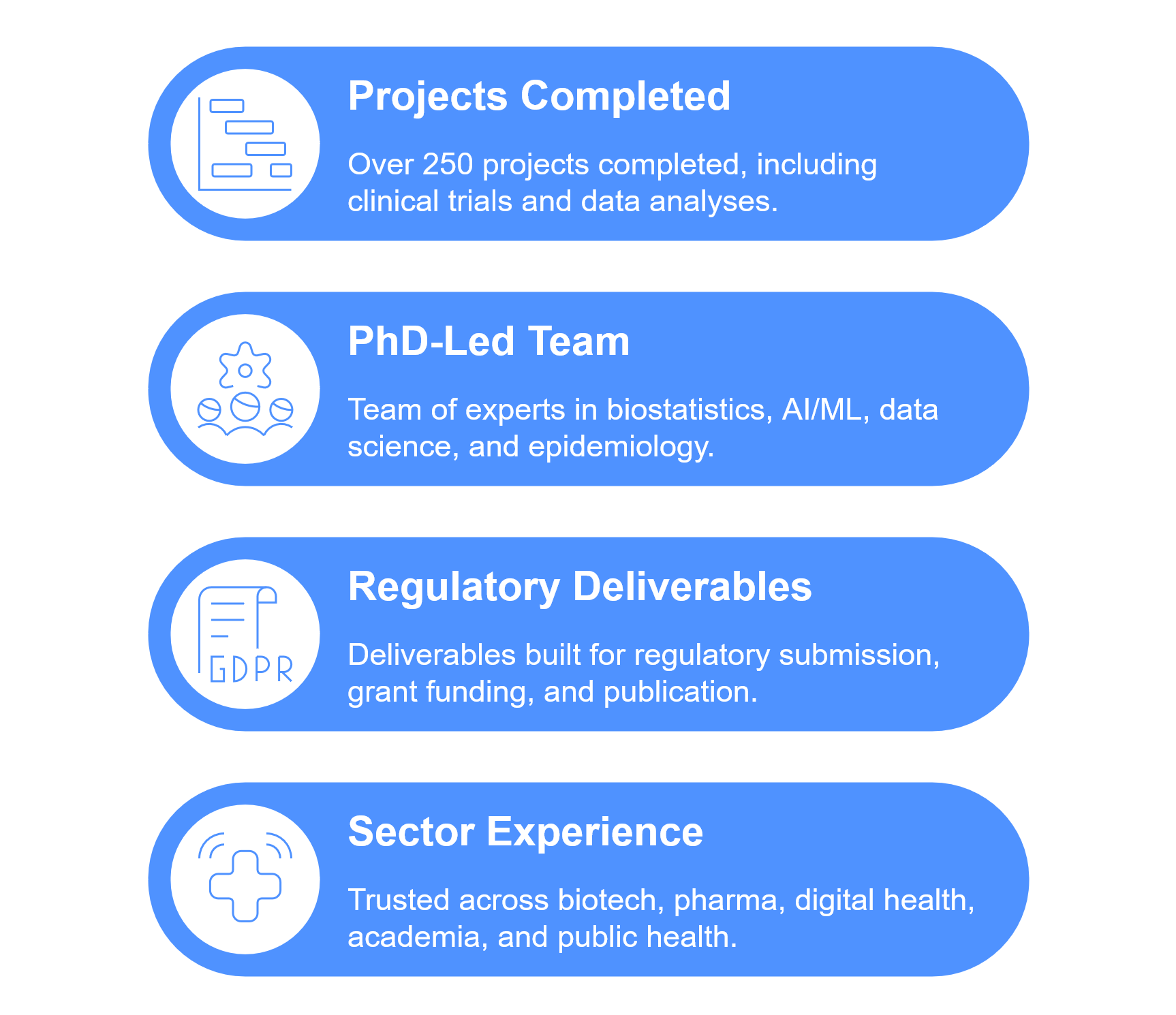
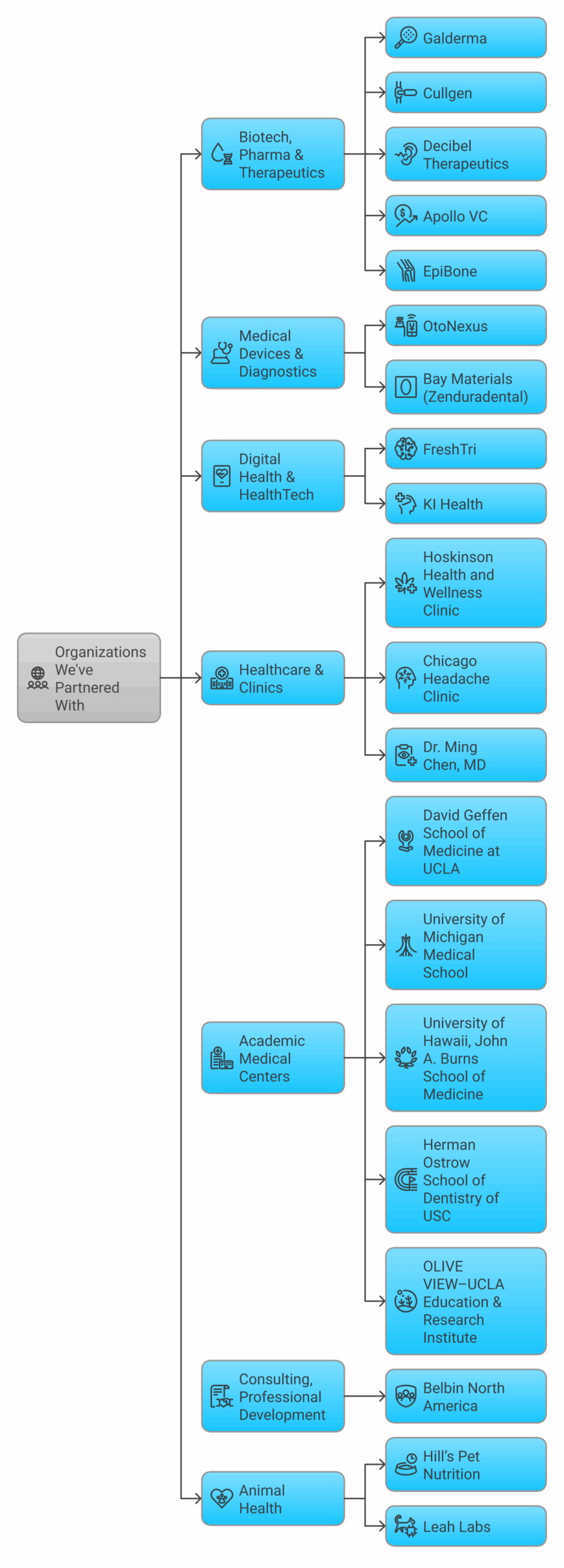
Clients We've Helped
Trusted by Leading Innovators Across Health, Life Sciences, Tech, and Academia
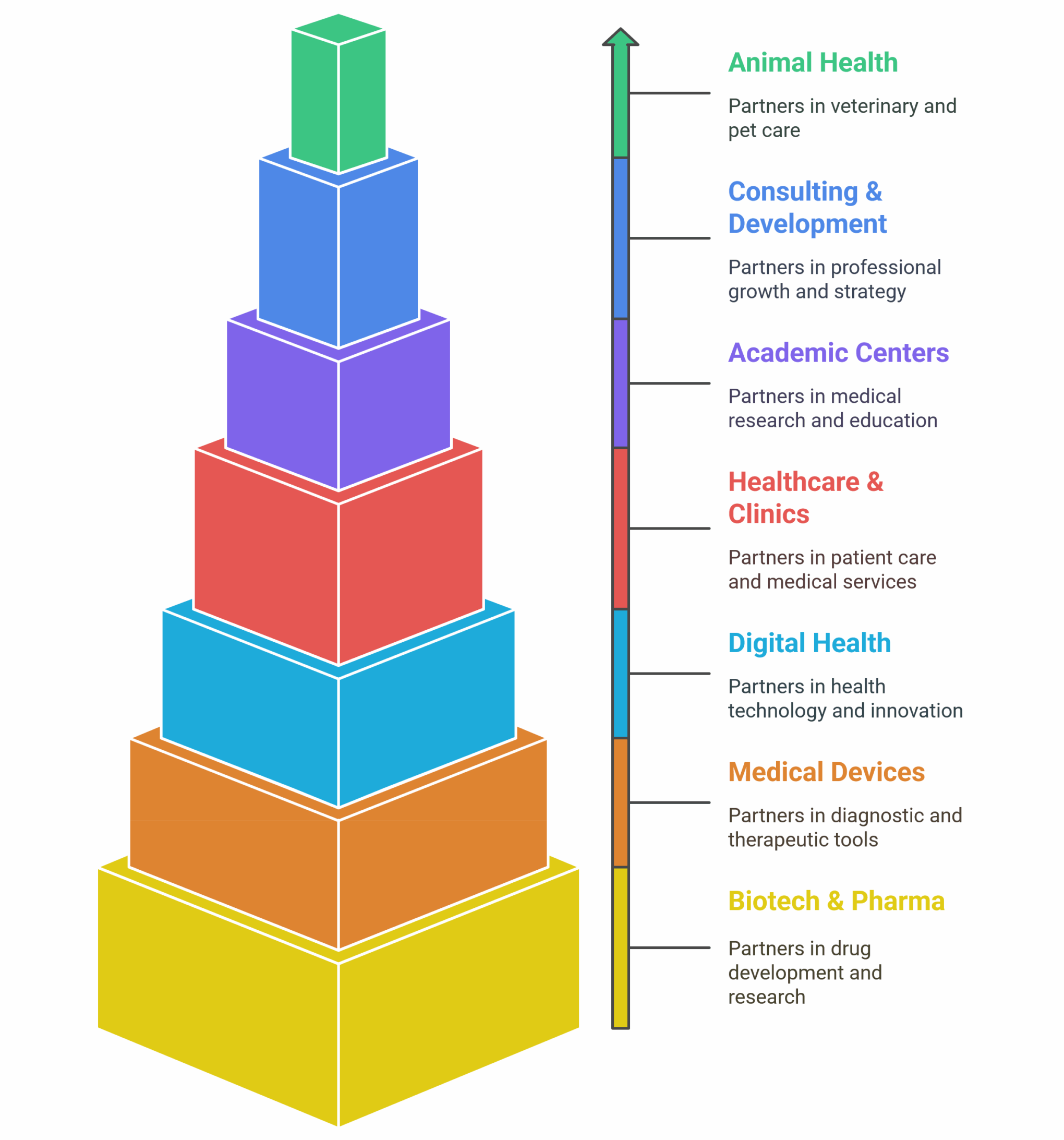
Partners in Progress
From clinical trials to innovation strategy — we help our partners make measurable impact
Partner with world-class experts to elevate your research and development projects. Let our network of accomplished scientists help you achieve impactful results.
Get Expert ConsultationAbout Us

Our consulting network consists of highly educated and experienced scientists, many of whom have Ph.D. degrees from leading American universities … Read More